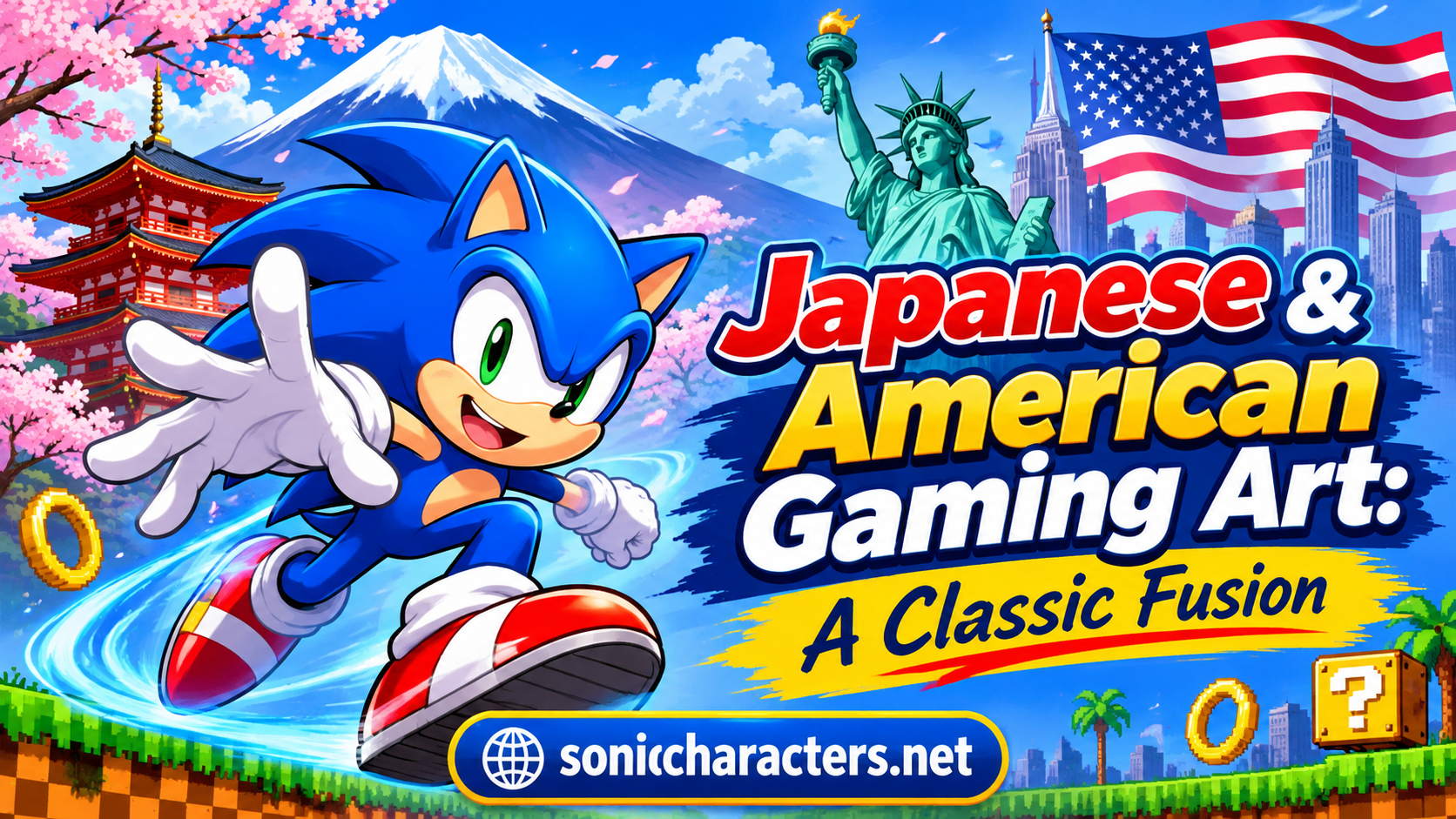
Classic video game artwork often tells a much bigger story than the characters and colorful backgrounds initially suggest. Behind the familiar blue hedgehog, energetic expressions, and imaginative environments lies a creative combination of different artistic traditions. The original Sonic the Hedgehog designs are particularly interesting because they bring together Japanese character design and visual ideas that appealed to American audiences. This combination offers an interesting example of how Japanese American cultural influences can shape an internationally recognized gaming identity.
When players look at classic Sonic artwork, they may notice its bright colors, exaggerated expressions, confident personality, and cartoon-inspired appearance. These details were not simply random artistic decisions. They helped establish a character who could communicate with audiences across different countries and generations.
The relationship between Japanese creativity and American pop culture is especially visible in Sonic’s early visual identity. While the character originated in Japan, his presentation was designed with international appeal in mind. Exploring this creative relationship helps explain why classic Sonic remains recognizable and relevant decades after his introduction.
1. The Japanese Creative Foundation Behind Classic Sonic
Sonic the Hedgehog was developed by Sega in Japan and introduced in 1991. His original appearance reflected the Japanese approach to character creation, where memorable silhouettes, expressive faces, and distinctive personalities often play an important role.
Japanese character designers frequently focus on making a character recognizable even when viewed from a distance. Sonic’s blue body, pointed quills, large eyes, and red shoes created a visual identity that was easy to recognize. His design was simple enough for small game sprites but expressive enough to support detailed promotional artwork.
This creative foundation became an important part of the Japanese American connection surrounding the franchise. Japanese developers introduced the character, while international marketing helped shape how he was presented to different audiences.
Classic Sonic artwork demonstrates how thoughtful character design can communicate personality without requiring complicated explanations. His confident smile and forward-leaning posture suggest speed, independence, and excitement. These characteristics became central to the character’s identity.
2. American Cartoon Influence on Sonic’s Appearance
American animation has a long history of exaggerated expressions, energetic movements, and colorful character personalities. These visual traditions influenced the wider entertainment environment in which Sonic was introduced to international audiences.
Classic Sonic artwork contains several features associated with Western cartoon illustration. His large eyes, expressive mouth, flexible poses, and exaggerated gestures make him feel energetic and approachable.
American cartoon characters often communicate through physical comedy and expressive body language. Sonic uses similar visual techniques. A raised eyebrow can suggest confidence, while a wide grin can communicate excitement or playful mischief.
These artistic qualities helped make Sonic appealing beyond the traditional video game audience. His personality could be understood by children, teenagers, and adults without requiring knowledge of Japanese culture.
The Japanese American creative relationship becomes particularly interesting here because the character’s original Japanese identity remained intact while his presentation embraced visual elements familiar to American entertainment audiences.
3. Color Choices That Made Classic Sonic Memorable
Color is one of the most powerful elements in character artwork. Sonic’s blue appearance immediately separates him from many traditional video game heroes, who often use red, green, or other dominant colors.
The bright blue body creates a strong contrast against colorful environments. Green hills, golden rings, blue skies, and red footwear produce an energetic visual combination that feels inviting and adventurous.
Classic Sonic artwork frequently uses saturated colors to communicate excitement. These choices make promotional illustrations feel lively, even when the character is standing still.
Color also contributes to brand recognition. Players can often identify Sonic through his blue silhouette before noticing the smaller details of his design.
This visual consistency demonstrates how Japanese character development and American commercial presentation could work together. The result was artwork that remained recognizable across game packaging, advertisements, posters, magazines, and merchandise.
4. The Influence of American Comic and Animation Expressions
Facial expressions are essential to successful cartoon characters. A character who can communicate through a smile, surprised look, or confident expression becomes easier for audiences to connect with.
Classic Sonic artwork uses exaggerated facial features to establish personality. His confident grin often makes him appear fearless, while his relaxed posture gives him a playful attitude.
American comic illustrations and animated television programs helped popularize this expressive visual language. Characters were frequently presented with dramatic poses, unusual proportions, and recognizable emotional reactions.
Sonic’s artwork shares some of these characteristics without losing its own identity. His expressions are generally bold and simple, allowing the viewer to understand his mood immediately.
The Japanese American influence is not about copying one particular animation style. Instead, it represents the creative exchange between different visual traditions. Japanese artists developed Sonic’s distinctive appearance, while familiar Western cartoon conventions helped communicate his personality to international audiences.
5. Environmental Design and the Appeal of American Landscapes
Sonic’s environments are just as memorable as the character himself. Green Hill Zone, with its rolling landscapes, palm trees, checkerboard patterns, and bright blue skies, established an imaginative world that felt open and adventurous.
The scenery combines unusual fantasy elements with natural landscape inspiration. Although Green Hill Zone is not a realistic location, its visual presentation creates a sense of freedom and exploration.
American audiences were familiar with colorful animated landscapes, adventurous outdoor settings, and imaginative environments from cartoons and entertainment media. These visual associations helped make Sonic’s world accessible to international players.
At the same time, the level design and artistic presentation retained the imaginative qualities associated with Japanese game development.
This mixture is another example of how Japanese American cultural exchange can be reflected in entertainment design. Different visual ideas can come together to create something that feels original rather than belonging entirely to one tradition.
6. Why Sonic’s Personality Connected With American Audiences
Sonic was designed to be more than a character who simply runs quickly. His personality became one of the most important reasons for his popularity.
He is confident, adventurous, independent, and occasionally mischievous. These characteristics helped distinguish him from other video game heroes of the early 1990s.
American popular culture has frequently celebrated characters who challenge authority, express individuality, and enjoy personal freedom. Sonic’s attitude fits naturally into this broader entertainment tradition.
However, these characteristics are not exclusively American. Japanese entertainment also features rebellious heroes and energetic characters who challenge expectations.
The combination makes Sonic particularly interesting from a Japanese American cultural perspective. His personality communicates familiar themes across different cultures without depending on a single cultural background.
Classic artwork reinforces this personality through dynamic poses, playful gestures, and confident facial expressions. Even a simple promotional illustration can make Sonic appear as though he is ready to jump into another adventure.
7. The Role of Marketing in Developing Sonic’s International Identity
A successful video game character needs more than an attractive design. The character must also be presented consistently across different forms of entertainment and marketing.
Sega understood the importance of creating an internationally recognizable identity for Sonic. Promotional illustrations, advertisements, packaging, and merchandise helped establish his appearance outside the games themselves.
Different markets sometimes received different promotional presentations. American marketing placed particular emphasis on Sonic’s attitude, speed, and confident personality. This helped distinguish him within the competitive gaming market of the early 1990s.
The Japanese American connection became especially visible through this international presentation. The character’s Japanese origins were combined with marketing choices that reflected the expectations of American consumers.
These efforts helped Sonic become a recognizable entertainment figure rather than simply the main character in a successful video game.
His artwork could appear on posters, clothing, magazine covers, and collectible products while maintaining a consistent visual identity.
8. Classic Sonic Artwork as a Meeting Point of Two Visual Traditions
One of the most interesting aspects of classic Sonic illustrations is how naturally different artistic ideas work together.
Japanese character design often emphasizes distinctive visual identities, expressive simplicity, and memorable proportions. American cartoon traditions frequently highlight energetic movement, exaggerated expressions, and strong personality.
Sonic brings these characteristics together in a recognizable way.
His pointed quills and compact body create a distinctive silhouette. His expressive eyes and confident smile communicate emotion. His dynamic poses make him appear constantly ready for action.
The result is artwork that feels familiar to audiences from different backgrounds while maintaining a unique personality.
This is why the Japanese American creative relationship is worth exploring. It demonstrates that international entertainment does not always need to choose between cultural identities. Instead, different influences can complement one another and produce a memorable artistic result.
9. Why Original Sonic Illustrations Still Attract Collectors
Classic Sonic artwork has developed a lasting appeal among video game collectors and longtime fans. Original promotional illustrations, vintage advertisements, and early game packaging are often appreciated for their distinctive artistic qualities.
Part of this appeal comes from nostalgia. Players who experienced the original games remember the colorful environments, energetic music, and simple but memorable character designs.
Another reason is the artwork’s visual character. Older Sonic illustrations often feature hand-drawn qualities, bold outlines, and expressive compositions that create a different feeling from modern digital artwork.
Collectors may appreciate the differences between Japanese promotional material and American advertising designs. These variations offer an opportunity to understand how the character was introduced and presented across different markets.
For anyone interested in Japanese American artistic influences, comparing original illustrations can reveal how the same character was interpreted through different creative and commercial perspectives.
10. The Lasting Influence of Classic Sonic’s Artistic Identity
Video game graphics have changed significantly since Sonic first appeared. Modern consoles can display detailed environments, realistic lighting, complex character animations, and sophisticated visual effects.
Despite these developments, the original Sonic design remains highly recognizable.
The reason is simple: strong character design does not depend entirely on technical detail. A memorable silhouette, distinctive color palette, and expressive personality can remain effective even when artistic technology changes.
Classic Sonic artwork continues to inspire fan illustrations, merchandise, retro gaming communities, and creative projects.
Artists frequently revisit the original designs because they offer a combination of simplicity and personality that is difficult to reproduce through technical detail alone.
The Japanese American influence also remains relevant when discussing the franchise’s international success. Sonic demonstrates how a character developed in one country can become part of global popular culture through creative collaboration, marketing, and audience engagement.
11. How Fans Can Appreciate the Cultural Details in Classic Sonic Artwork
Fans do not need to be professional artists or gaming historians to appreciate the cultural influences behind Sonic’s appearance. A closer look at the original illustrations can reveal several interesting details.
First, compare the character’s proportions across different promotional materials. Notice how his body shape, facial expressions, and poses communicate different aspects of his personality.
Second, examine the backgrounds. Green Hill Zone and other classic environments use colorful scenery, unusual patterns, and imaginative elements to establish a recognizable visual atmosphere.
Third, compare Japanese and American promotional illustrations when reliable original examples are available. Differences in composition, expression, and presentation can reveal how creative teams approached different audiences.
Finally, consider the historical context. Sonic appeared during a period when video games were becoming an increasingly important part of international entertainment. His visual identity reflects the growing relationship between Japanese game development and Western popular culture.
This approach makes exploring Japanese American artistic influences more enjoyable because it encourages fans to look beyond the familiar blue character and examine the creative decisions behind his design.
12. Why the Japanese American Connection Matters Beyond Sonic
Sonic’s success represents a broader development in entertainment history. Video games, animation, comics, and other creative industries increasingly share ideas across national boundaries.
Japanese developers have introduced characters and visual styles that have become internationally recognizable. American entertainment traditions have also influenced the way many Japanese properties are marketed, adapted, and presented to Western audiences.
These exchanges demonstrate that creative influence is rarely limited to one country.
The Japanese American relationship in classic Sonic artwork provides a useful example of this process. It shows how character design, animation conventions, marketing strategies, and audience expectations can work together.
It also reminds us that cultural exchange does not necessarily remove a character’s original identity. Sonic remains unmistakably connected to Sega’s Japanese development history while enjoying a global presence.
This balance is an important part of what makes the franchise interesting to longtime fans and new players.
Conclusion: A Timeless Combination of Japanese and American Creativity
Classic Sonic artwork is more than a collection of colorful illustrations featuring a famous video game character. It represents a creative meeting point between Japanese game development and the visual traditions that helped make the character appealing to international audiences.
From his recognizable blue silhouette to his confident expressions and adventurous environments, Sonic demonstrates how artistic decisions can communicate across cultural boundaries.
The Japanese American connection surrounding the character helps explain why his visual identity became so successful. Japanese creativity established the foundation, while international presentation and familiar cartoon influences contributed to his wider appeal.
Even after decades of technological progress, the original artwork continues to attract attention from fans, collectors, and artists. Its lasting popularity proves that memorable design, expressive storytelling, and creative cultural exchange can have an impact far beyond the era in which a character first appeared.
For fans exploring classic Sonic illustrations, understanding these influences offers a fresh way to appreciate a familiar gaming icon.