Some characters become popular for a season, while others turn into legends that continue to entertain new generations. Sonic belongs firmly in the second category. With his unmistakable blue spikes, red shoes, quick wit, and incredible speed, Sonic has become one of the most recognizable faces in video game history. His adventures combine fast-paced action, colorful environments, memorable friendships, and a rebellious personality that makes every journey exciting.
The story of this famous hedgehog began with a simple idea: create a hero who could move faster than anyone else and make players feel that speed through their controllers. That idea eventually developed into a worldwide entertainment franchise featuring video games, animated shows, comic books, merchandise, and blockbuster movies.
Yet Sonic’s popularity is not based on speed alone. His confidence, loyalty, humor, and determination give his adventures a personality that goes beyond racing through colorful levels. Whether he is escaping a collapsing platform, challenging a powerful enemy, or helping a friend in trouble, Sonic always brings energy to the moment.
1. How Sonic Became a Gaming Icon
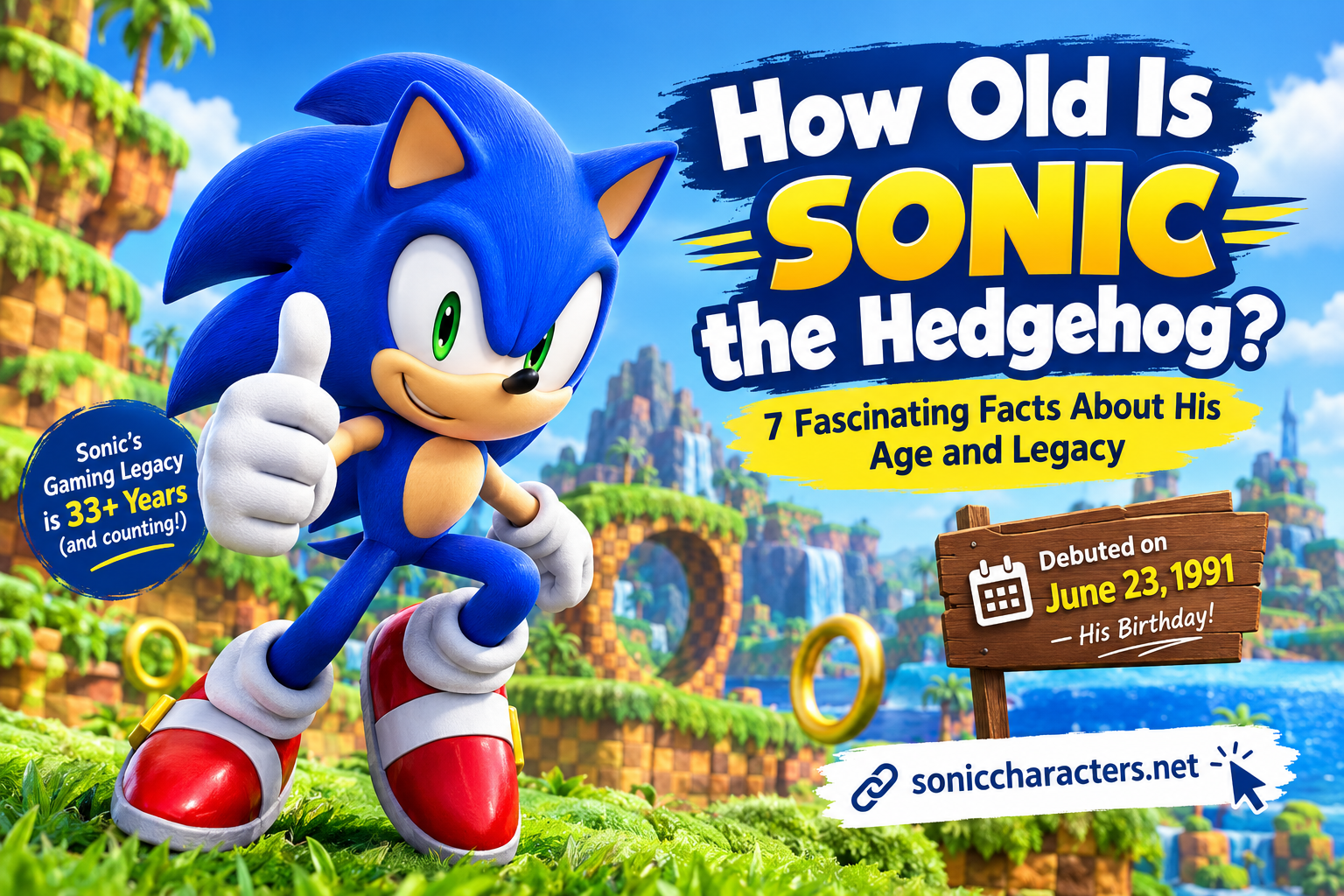
Sonic first appeared in 1991 in the original Sonic the Hedgehog video game for the Sega Genesis. During that period, platform games were becoming increasingly popular, and developers were searching for creative ways to make their experiences stand out. Sonic offered a different approach by emphasizing momentum, rapid movement, and large environments designed around speed.
Rather than moving slowly from one obstacle to another, players could build momentum, run through loops, collect rings, and discover hidden routes. The gameplay encouraged experimentation because different paths could lead to different rewards. Learning when to accelerate, when to slow down, and how to maintain control became an important part of mastering the experience.
Sega introduced Sonic as a confident alternative to traditional platform heroes. His design was simple enough to recognize instantly, while his personality communicated independence and attitude. The blue color, red footwear, and distinctive spikes helped establish an identity that worked across games, advertisements, and other media.
The original game also demonstrated how a strong visual identity and enjoyable mechanics could work together. Even players who had never heard of the franchise could understand its central attraction: move quickly, explore the environment, collect valuable items, and defeat enemies.
Over time, Sonic developed into a cultural symbol of speed and adventure. The franchise continued to evolve, but its central character remained recognizable. That balance between familiarity and experimentation has helped the blue hero remain relevant for decades.
2. The Secret Behind Sonic’s Incredible Speed
Speed is the defining feature of Sonic’s adventures, but the best games do more than allow the character to run quickly. They create environments where movement itself becomes the main attraction.
In many platform games, players focus on careful jumps and precise positioning. Sonic introduces another rhythm. A well-designed path might send the player racing down a hill, spinning through a loop, launching into the air, and landing on a new route before the next obstacle appears.
The experience can feel almost effortless when everything connects properly. However, reaching that point requires practice. Players must learn how momentum works, recognize environmental clues, and understand when moving at maximum speed is actually a bad idea.
A fast-moving hedgehog needs more than a straight road. Sonic’s worlds contain springs, slopes, platforms, traps, and enemies that test both reaction time and decision-making. Rushing without paying attention can cause players to miss collectibles or fall into hazards.
This relationship between freedom and control gives Sonic gameplay its lasting appeal. Experienced players can search for the fastest route, while newcomers can explore at a comfortable pace. Both approaches can be enjoyable because the games often reward curiosity as much as raw speed.
Different entries in the franchise have also experimented with new movement abilities, camera perspectives, and level structures. Some focus on classic two-dimensional platforming, while others explore three-dimensional environments. These changes allow developers to reinterpret Sonic’s signature ability without abandoning the basic fantasy of being incredibly fast.
3. A Colorful World Filled With Adventure
Sonic’s adventures rarely take place in ordinary environments. Instead, players visit imaginative locations filled with unusual architecture, natural scenery, mechanical structures, and unexpected dangers.
Green Hill Zone remains one of the most recognizable examples. Its bright colors, rolling hills, checkerboard patterns, palm trees, and familiar musical style create an inviting introduction to the series. The setting demonstrates how a relatively simple environment can become memorable through strong artistic direction.
Other locations introduce different moods. Some feature industrial machinery and moving platforms, while others use underwater sections, ancient ruins, snowy landscapes, or futuristic cities. Every environment presents new visual details and gameplay challenges.
These places are not merely decorative backgrounds. Their shapes and structures influence how players move. A steep slope can encourage acceleration, while a suspended platform may require careful timing. Springs, loops, and alternate pathways turn the scenery into an active part of the adventure.
The design also gives players reasons to revisit familiar stages. A first attempt might involve surviving the level, but later runs can focus on finding secret routes, improving completion times, or collecting additional rewards.
For a franchise centered on a fast-moving hedgehog, the environments must remain readable even when the action becomes intense. Clear silhouettes, recognizable hazards, and distinctive colors help players understand what is happening without constantly stopping to examine the screen.
That combination of beauty and function is one reason Sonic’s worlds remain memorable. They are designed not only to look exciting but also to make movement feel satisfying.
4. Friends Who Make the Adventures More Interesting
Although Sonic is often the center of attention, the characters surrounding him add depth to the franchise. His friendships create different personalities, abilities, and relationships that influence the stories.
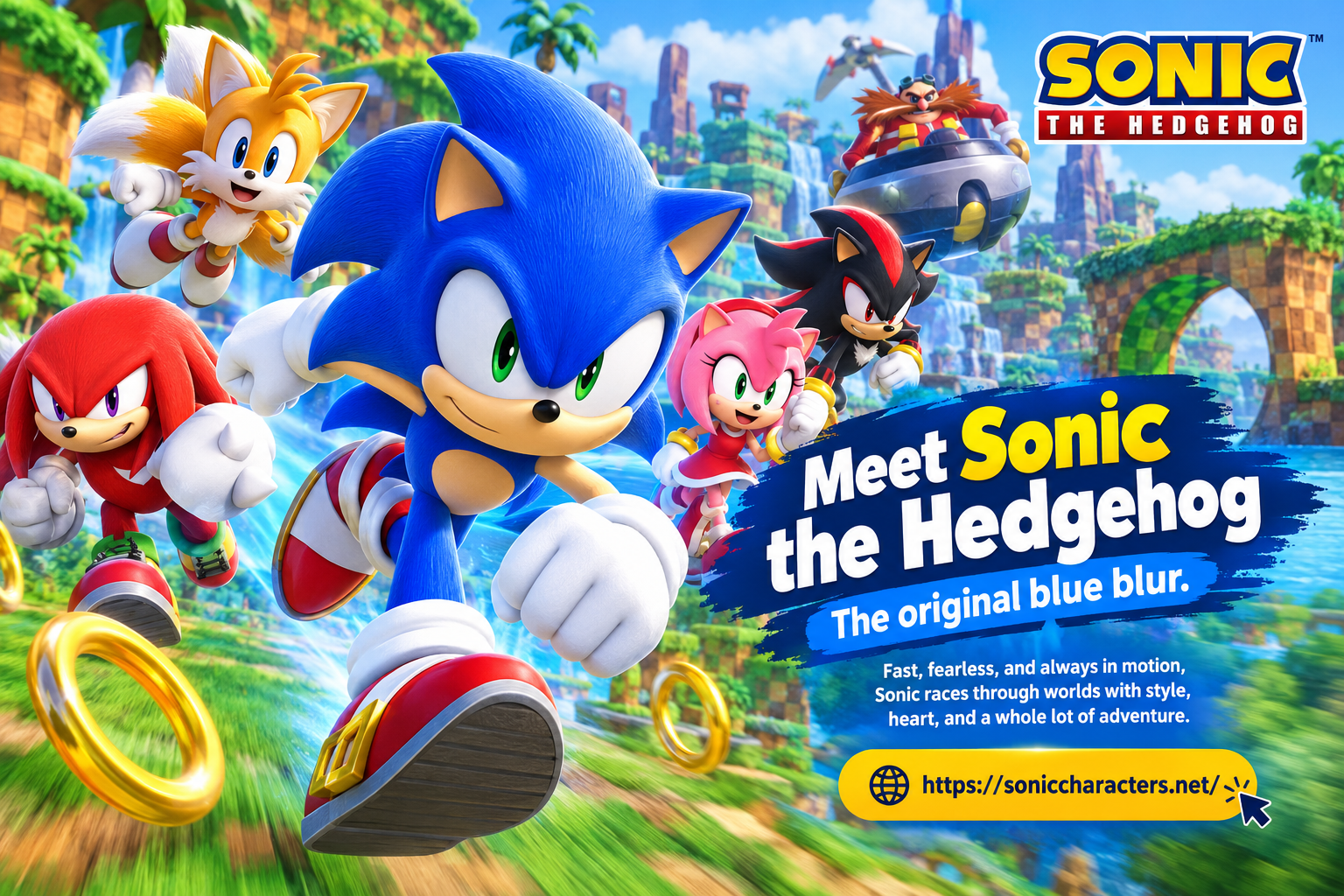
Miles “Tails” Prower is one of Sonic’s closest companions. His twin tails allow him to fly, while his mechanical knowledge makes him valuable whenever a problem requires more than speed. Tails is intelligent, inventive, and loyal, offering a contrast to Sonic’s more impulsive approach.
Knuckles the Echidna brings another kind of energy. Strong, determined, and protective of the Master Emerald, Knuckles often approaches challenges differently from Sonic. His sense of duty can create conflict, but it also makes him a dependable ally when the situation demands cooperation.
Amy Rose adds enthusiasm, courage, and determination to the wider group. Her personality has developed across different games and adaptations, giving her a role that extends beyond simply following Sonic. She can be caring and energetic while still standing up for herself and others.
Shadow the Hedgehog introduces a more serious tone. His complicated past, extraordinary abilities, and personal struggles create stories that explore identity, loyalty, and difficult choices. His contrast with Sonic makes their encounters particularly interesting.
Each character contributes something different. Some solve technical problems, others provide physical strength, and others challenge Sonic’s decisions. Their abilities also create opportunities for different gameplay styles.
The supporting cast proves that a successful hedgehog adventure does not have to revolve around one hero doing everything alone. Friendship, disagreement, and cooperation give the stories emotional variety and make the larger world feel more complete.
5. Dr. Eggman: The Villain Behind the Chaos
Every memorable hero benefits from a strong opponent, and Sonic has one of gaming’s most recognizable villains in Dr. Eggman, also known as Dr. Robotnik in some games and regions.
Eggman is a brilliant inventor with enormous ambitions. He frequently attempts to control the world through robotic armies, dangerous machines, and elaborate schemes. His inventions can be intimidating, but his exaggerated personality also gives the stories a sense of comedy.
The rivalry works because the two characters approach problems in opposite ways. Sonic relies on agility, improvisation, and quick reactions. Eggman prefers machines, planning, and technological superiority. Their conflicts turn into battles between natural movement and mechanical control.
Eggman’s robots also provide variety in gameplay. Players encounter enemies that move in different patterns, operate dangerous equipment, or guard important sections of a level. Boss battles often require recognizing an attack pattern and finding the right moment to respond.
His presence also gives Sonic’s adventures a broader purpose. The hero is not simply racing for entertainment; he often needs to protect animals, communities, or entire worlds from Eggman’s destructive plans.
The villain has evolved over time, appearing in different forms across games, television, comics, and films. Some adaptations emphasize his threatening intelligence, while others highlight his theatrical humor.
That flexibility helps the rivalry remain entertaining. Sonic’s speed creates the excitement, but Eggman’s creativity continually gives the hero new challenges to overcome.
6. Rings, Power-Ups, and the Joy of Collecting
Golden rings are among the most recognizable elements of Sonic’s gameplay. They appear throughout many adventures and give players a simple, rewarding objective while exploring each level.
Collecting rings can provide protection against damage in many games. When Sonic is hit while carrying rings, he may lose them, creating a brief scramble to recover as many as possible. This mechanic turns a seemingly simple collectible into an important strategic resource.
Players must decide whether to take a risky route for extra rings or choose a safer path. A dangerous jump might offer a large reward, but missing it can cost valuable progress. Those small decisions make even familiar stages feel engaging.
Other collectibles and power-ups expand the experience. Depending on the game, players may discover shields, temporary invincibility, speed boosts, extra lives, or special items that unlock additional opportunities.
These systems also support replayability. Someone who has completed a level can return to search for missed collectibles, discover hidden areas, or improve a previous performance.
For newcomers, the familiar sight of rings immediately communicates what the game wants them to do. For longtime fans, the sound and animation of collecting them can bring back memories of earlier adventures.
The collectible system demonstrates how a simple design element can become part of a franchise’s identity. A golden ring is easy to understand, but its role in exploration, survival, and scoring gives it lasting significance.
7. Sonic Beyond Video Games
Sonic’s popularity eventually expanded beyond consoles and handheld systems. The character appeared in animated television programs, comics, books, toys, and other products that introduced the franchise to audiences who might never have played the original games.
Different adaptations have explored different sides of the character. Some focus on humorous adventures and lighthearted friendship, while others introduce futuristic settings, dramatic conflicts, or alternate interpretations of familiar characters.
The animated series helped establish Sonic as a personality who could carry a story outside an interactive environment. Comics expanded the world further by exploring supporting characters, long-running rivalries, and situations that could not easily fit into a single game.
The live-action movie series brought another major opportunity. By combining computer-generated characters with real-world environments and actors, the films introduced Sonic to audiences who knew him primarily through popular culture rather than gaming.
The movies also highlighted the character’s humor, energy, and emotional relationships. Although film adaptations change details to suit their medium, they retain the recognizable qualities that define Sonic: speed, confidence, independence, and a willingness to help others.
This wider presence has allowed different generations to experience the franchise in different ways. A parent might remember playing the early games, while a younger family member discovers the character through a movie or a newer console release.
The name has become bigger than any single title. Sonic is now an entertainment property whose identity can adapt to different formats while preserving its central appeal.
8. What Makes Sonic Different From Other Gaming Heroes?
Video game history is full of memorable characters, but Sonic has a distinctive personality and style. His attitude is confident without requiring him to act like a traditional noble warrior. He often jokes with opponents, trusts his instincts, and prefers action over lengthy explanations.
That independent spirit gives his stories a particular rhythm. Sonic usually does not wait for someone else to solve a problem. When danger appears, he moves toward it, often before fully understanding the situation.
His confidence also creates opportunities for character development. Being fast does not mean he can solve every problem instantly. He may need help from friends, learn to trust someone, or recognize that a difficult situation requires patience instead of immediate action.
The character’s visual design is another advantage. Blue spikes, red shoes, expressive eyes, and a compact silhouette make him recognizable in many artistic styles. These features work equally well in pixel art, modern three-dimensional graphics, animation, and film.
A successful hedgehog hero also needs a strong emotional identity. Sonic represents freedom, curiosity, and the excitement of exploring unfamiliar places. His adventures often reward players who experiment rather than follow only the safest route.
The franchise has changed its technology and storytelling over the years, but those core ideas remain familiar. Even when a new game introduces different mechanics or a new environment, players can still recognize the spirit of the character.
That consistency allows Sonic to evolve without losing the qualities that made him popular in the first place.
9. Why New Generations Continue to Discover Sonic
One reason Sonic remains appealing is that the franchise offers several entry points. Someone can begin with a classic platform game, try a modern three-dimensional adventure, watch an animated series, or enjoy a film without needing to understand every previous story.
The variety also allows different audiences to find something they enjoy. Younger players may appreciate the colorful environments, funny characters, and straightforward objectives. Experienced fans may prefer mastering difficult stages, comparing completion times, or discovering hidden details.
Modern gaming has changed significantly since Sonic’s debut, yet fast movement and satisfying controls still have a place. Players continue to appreciate games that make their actions feel responsive and reward practice.
Nostalgia also contributes to the franchise’s appeal, but it cannot explain everything. New audiences need enjoyable experiences of their own, and Sonic continues to receive new interpretations through games and other media.
A familiar character can remain interesting when creators introduce fresh challenges without discarding the qualities fans love. Sonic’s world offers room for new locations, different companions, alternate abilities, and new storytelling approaches.
The franchise’s history also gives fans plenty to discuss. Players can compare favorite stages, debate which games offer the best movement, and share memories of discovering a hidden route for the first time.
For many people, Sonic is not just a hedgehog who runs quickly. He represents a particular kind of gaming excitement: the feeling of gaining momentum, reacting to a challenge, and discovering that the next corner might lead somewhere unexpected.
Sonic’s Lasting Legacy
Sonic’s journey from a 1991 video game hero to a global entertainment icon demonstrates the value of a strong idea supported by creative development. His speed made him stand out, but his memorable design, colorful settings, friendships, and rivalries helped him become much more than a simple mascot.
The franchise has experimented with different genres, visual styles, and storytelling approaches. Not every experiment appeals to every fan, but that willingness to explore new directions has kept Sonic’s world active across multiple generations.
His adventures also communicate ideas that remain easy to appreciate. Curiosity encourages exploration, friendship makes difficult tasks manageable, and confidence can help someone face an unfamiliar challenge. These themes fit naturally into the fast-paced action without requiring complicated explanations.
For longtime fans, Sonic offers a connection to earlier gaming memories. For newcomers, he provides an accessible introduction to a world filled with movement, humor, and adventure. Both groups can find their own reasons to enjoy the character.
Ultimately, the lasting appeal of Sonic the Hedgehog comes from the way the franchise combines recognizable traditions with opportunities for change. The blue blur may be famous for reaching the finish line quickly, but his cultural journey shows that the most memorable characters can travel much farther.
As long as players enjoy discovering new worlds, mastering challenging stages, and following heroes with personality, Sonic will have room to race into another adventure.