Drawing your favorite video game characters can be an exciting way to explore creativity, improve artistic skills, and enjoy something you already love. Among the many characters that inspire young artists, Sonic the Hedgehog remains one of the most recognizable. His bright blue appearance, energetic personality, red shoes, and confident expression make him an interesting subject for artists of different skill levels. Whether you are picking up a pencil for the first time or already enjoy sketching cartoon characters, learning sonic drawing techniques can turn a simple hobby into an enjoyable creative activity.
Sonic’s design may look complicated at first, especially because of his distinctive spikes, large eyes, gloves, and unusual proportions. However, breaking the character into smaller shapes makes the process much easier. Instead of trying to draw every detail immediately, you can begin with basic circles, curved lines, and simple outlines before adding the features that make Sonic recognizable.
This guide explores practical drawing methods, useful materials, character details, and creative exercises. It also introduces ways to develop your own artistic style while practicing different Sonic characters. By following these lessons, beginners can gradually build confidence and discover how enjoyable character illustration can become.
Why Sonic Is an Interesting Character to Draw
Sonic has remained popular across video games, television shows, comics, and animated adventures for decades. His recognizable design gives artists plenty of interesting details to practice. From his pointed quills to his expressive eyes, almost every part of his appearance offers an opportunity to learn a different drawing technique.
One reason sonic drawing is enjoyable is that the character combines simple cartoon shapes with distinctive features. His head can be developed using an oval, his body can be constructed from basic forms, and his arms and legs can be represented with curved lines. Once the basic structure is complete, smaller details bring the illustration to life.
Sonic also appears in different poses and expressions. You can sketch him standing confidently, running at incredible speed, jumping through the air, or preparing for an adventure. Each pose teaches something different about movement, balance, and character proportions.
For beginners, these variations make drawing practice less repetitive. Rather than creating the same picture every time, you can experiment with different expressions, angles, and positions.
Materials You Need Before Starting
You do not need expensive equipment to begin drawing Sonic characters. A few basic supplies are enough to create an attractive illustration. As your skills improve, you can experiment with additional materials and digital drawing applications.
Here are some useful supplies:
- Drawing pencils: An HB pencil works well for initial sketches, while softer pencils can help create darker outlines and shadows.
- Eraser: A clean eraser helps remove construction lines without damaging the paper.
- Drawing paper: Choose smooth paper that allows you to create clean curves and detailed shapes.
- Black pen or marker: These tools are useful for outlining the final illustration.
- Colored pencils: Different shades of blue, red, white, and peach can help complete Sonic’s appearance.
- Reference pictures: Looking at official character artwork can help you understand proportions and recognizable features.
A beginner can start with nothing more than a pencil and notebook. The most important thing is regular practice rather than purchasing professional equipment.
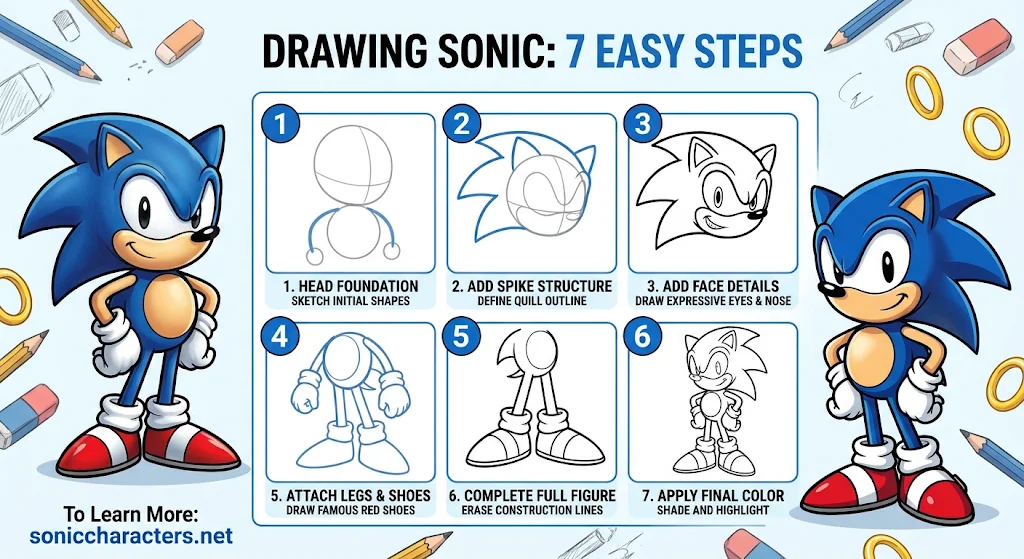
Sonic Drawing: 7 Easy Steps for Beginners
The easiest way to approach a Sonic illustration is to divide it into manageable stages. Each stage focuses on a different part of the character, allowing you to correct mistakes before moving forward.
Step 1: Create the Basic Head Shape
Begin by drawing a slightly tilted oval. This shape will become the foundation of Sonic’s head. Avoid making the oval perfectly circular because Sonic has a distinctive cartoon appearance with a slightly elongated face.
Add a light vertical guideline through the center of the head. Draw another curved guideline horizontally across the face to establish the position of the eyes and nose.
Keep your pencil pressure light. These early lines are only guides, and you will erase them later.
Step 2: Add Sonic’s Signature Spikes
Sonic’s pointed quills are among the most recognizable parts of his design. Start by adding several long triangular shapes behind the head.
The spikes should point backward, creating the impression that Sonic is ready to move at high speed. Try varying their lengths slightly instead of making every spike identical.
Use smooth curved connections between the spikes and the head. Sharp corners can make the design look stiff, so a combination of pointed ends and flowing curves usually works better.
This stage is especially important in sonic drawing because the quills help distinguish Sonic from ordinary cartoon characters.
Step 3: Draw the Eyes and Facial Expression
Sonic’s eyes give the character much of his personality. Draw two large connected eye shapes near the upper part of the face. Keep their overall appearance rounded and expressive.
Add pupils inside the eyes, making sure they face the same direction. This helps create a focused expression.
Next, sketch a small oval or rounded shape for the nose. Draw a curved mouth beneath it to give Sonic his familiar confident smile.
You can change the mouth to create different emotions. A wide smile makes him look cheerful, while a determined expression is useful for action poses.
Step 4: Sketch the Body and Arms
Once the head is complete, move toward the body. Sonic has a relatively compact cartoon body, so avoid making his torso too large.
Start with a small oval beneath the head. Add curved lines for the shoulders and arms. One arm can rest beside the body, while the other can be raised to create an energetic pose.
Use simple rounded shapes to represent the hands before adding his gloves. This approach makes the proportions easier to manage.
Beginners practicing sonic drawing should remember that the arms do not need complicated details during the first sketch. Focus on the overall position and movement.
Step 5: Add the Legs and Famous Red Shoes
Sonic’s legs are relatively short compared with his head and shoes. Draw two simple curved shapes extending from the lower body.
Add his large shoes at the bottom. Their rounded shape and recognizable design are important details.
Use separate curved lines to represent the shoe openings, straps, and soles. Keep both shoes consistent in style, even if one is shown from a different angle.
If Sonic is running or jumping, bend the legs to match the direction of movement. This will make the final illustration feel more active.
Step 6: Clean the Outline and Add Details
After completing the basic structure, carefully erase unnecessary guidelines. Review the head, spikes, eyes, hands, shoes, and body to make sure the shapes connect naturally.
Use a black pen or darker pencil to create the final outline. Add small details such as glove cuffs, shoe sections, facial curves, and quill edges.
At this stage, your sonic drawing should have a recognizable character shape. Do not worry if some proportions are slightly different from official artwork. Personal drawing styles often develop through small variations.
Step 7: Apply Colors and Finishing Touches
The final step is adding color. Sonic is traditionally associated with bright blue fur, peach-colored skin areas, white gloves, and red shoes.
Use different shades of blue to create depth. A darker blue can be applied around the spikes and body edges, while a lighter shade can add highlights.
Color the gloves white and use red for the shoes. Add black details to the pupils and outlines.
You can also create a simple background featuring clouds, grass, rings, or a familiar video game-inspired landscape. Keep the background relatively simple so that Sonic remains the main subject.
Once the colors are complete, your beginner illustration is ready!
Popular Sonic Characters You Can Practice Drawing
After learning the basic drawing process, you can expand your practice by exploring other characters from the Sonic universe. Each character has a unique appearance, making them useful subjects for improving different artistic techniques.
Drawing Tails
<escape>Tails</escape> is one of Sonic’s closest friends. His orange-yellow appearance, two distinctive tails, and friendly expression make him a fun character to sketch.
Start with a rounded head and add two large ears. Draw his eyes and small muzzle before creating his body. The most important feature is his pair of tails, which should be clearly separated.
When practicing Tails, pay attention to the fluffy appearance of his tails. Use several curved lines to make them look soft rather than perfectly geometric.
Drawing Knuckles
Knuckles has a stronger and more muscular appearance than Sonic. His red color, large gloves, and distinctive spiked knuckles make him easy to recognize.
Begin with the head and body proportions. Add his long dreadlock-like spikes behind the head, then work on his gloves and shoes.
Knuckles is a good character for practicing stronger outlines and slightly more angular shapes.
Drawing Shadow
Shadow the Hedgehog has a darker appearance and a more serious personality. His black and red color combination creates a noticeable contrast.
Start with a head shape similar to Sonic’s, but adjust the spikes to match Shadow’s design. Add the red markings and carefully draw his facial expression.
Artists who want to explore different character moods can use Shadow as a useful practice subject.
Drawing Amy Rose
Amy Rose introduces a different style of character illustration. Her pink appearance, rounded hairstyle, and recognizable red dress make her design stand out.
Begin with a circular head and add her hair details. Draw her dress using simple curved shapes before adding her boots and gloves.
Amy is particularly useful for practicing clothing details, softer outlines, and expressive facial features.
Different Sonic Drawing Styles to Explore
There is no single way to illustrate Sonic. Artists can experiment with different approaches depending on their experience, preferred materials, and creative goals.
Classic Cartoon Style
Classic illustrations focus on recognizable shapes and expressive faces. They often use bold outlines, simple shading, and bright colors. This is an excellent starting point for beginners.
Modern Character Style
Modern Sonic artwork often includes sharper details, more dynamic poses, and slightly different proportions. Artists can practice this style after becoming comfortable with basic character construction.
Chibi Drawing Style
Chibi characters have oversized heads and smaller bodies. This approach makes Sonic look cute and playful. It is also easier for beginners who find realistic proportions challenging.
Pencil Sketch Style
A pencil sketch focuses on outlines, shading, and texture rather than bright colors. You can create depth by changing pencil pressure and adding darker areas beneath the spikes and around the shoes.
Digital Illustration Style
Digital tools allow artists to experiment with layers, brushes, colors, and different effects. Beginners can use drawing applications to practice without worrying about wasting paper.
Trying several styles can help you discover which approach feels most comfortable.
How to Draw Sonic in Different Action Poses
Sonic is famous for speed, so static illustrations are only one part of the drawing experience. Learning how to represent movement can make your artwork more exciting.
Running Pose
For a running pose, tilt Sonic’s body slightly forward. Extend one leg behind him and bend the other toward the front. Position his arms in opposite directions to create a natural sense of motion.
You can add curved speed lines behind his body to suggest fast movement.
Jumping Pose
A jumping pose should make Sonic appear as though he is floating in the air. Raise both arms or extend one arm forward. Bend his legs and position the shoes at different angles.
The body should be slightly tilted to make the movement look natural.
Standing Pose
A standing illustration is useful for beginners because it focuses on proportions rather than complicated movement. Keep the feet balanced, shoulders relaxed, and head facing forward.
Once you understand the basic structure, you can experiment with different hand positions and facial expressions.
Action Attack Pose
For an action pose, create a compact body position and use curved movement lines. Sonic’s head can point toward the direction of movement while the spikes extend backward.
These exercises make sonic drawing more interesting because they introduce movement, balance, and visual storytelling.
Common Mistakes Beginners Should Avoid
Learning to draw takes patience. Even experienced artists make mistakes, so beginners should not expect every illustration to look perfect.
Here are some common problems to watch for:
Making the Head Too Small
Sonic’s head is an important part of his overall appearance. If it is too small, the character may lose his recognizable cartoon proportions.
Drawing Uneven Eyes
The eyes should have a consistent shape and direction. Light guidelines can help keep them properly aligned.
Forgetting the Quills
The spikes are essential to Sonic’s appearance. Pay attention to their direction, length, and connection with the head.
Using Heavy Pencil Pressure
Dark construction lines can be difficult to erase. Start with light strokes and strengthen the final outline later.
Adding Too Many Details Too Early
Trying to draw every small feature immediately can make the process confusing. Complete the main shapes before adding smaller details.
Ignoring the Character’s Pose
A character can look unnatural if the arms and legs do not match the intended movement. Study the pose before drawing individual body parts.
Avoiding these mistakes will make your sonic drawing practice more productive and enjoyable.
Tips to Improve Your Drawing Skills
Consistent practice is one of the best ways to improve your artwork. You do not need to spend several hours every day drawing. Even a short daily session can help you become more comfortable with shapes, proportions, and character details.
Here are some practical suggestions:
- Practice basic shapes: Draw circles, ovals, triangles, and curved lines before attempting complicated illustrations.
- Study character references: Observe official artwork to understand Sonic’s proportions and recognizable features.
- Try different expressions: Draw Sonic smiling, laughing, looking surprised, or showing determination.
- Experiment with poses: Practice running, jumping, standing, and sitting positions.
- Use simple backgrounds: Add rings, clouds, and familiar landscape elements to make your artwork more interesting.
- Compare older sketches: Keep your drawings so you can see how your skills improve over time.
- Avoid rushing: Spend enough time on each stage rather than trying to finish everything quickly.
A useful exercise is to draw Sonic’s head five times using slightly different angles. This helps you understand how the spikes, eyes, and nose change depending on the direction of the face.
Why Step-by-Step Drawing Lessons Are Helpful
Step-by-step lessons make character illustration easier because they turn a complicated subject into smaller tasks. Instead of concentrating on the entire character, learners can focus on one feature at a time.
For example, someone who struggles with facial expressions can practice the eyes and mouth separately. Another artist might spend more time learning how to draw the spikes or create natural running poses.
This structured approach is particularly helpful for younger artists who are developing their hand coordination and visual observation skills.
Following sonic drawing tutorials can also encourage creative independence. Once you understand the basic structure, you can change the pose, add accessories, or create an original background.
The goal is not simply to copy an existing picture. It is to understand how the character is constructed so that you can eventually create your own illustrations.
Traditional Drawing vs Digital Drawing
Both traditional and digital methods have advantages. Choosing between them depends on your available equipment and personal preference.
Traditional drawing uses physical materials such as pencils, paper, markers, and colored pencils. It is affordable, easy to start, and useful for improving hand control.
Digital drawing uses a tablet, computer, or compatible smartphone. Drawing applications provide tools for layers, undo options, adjustable brushes, and color selection.
Beginners may find traditional drawing easier because it requires fewer technical skills. However, digital illustration offers more flexibility when experimenting with different colors and effects.
You can also combine both approaches. For example, create an initial pencil sketch on paper, then use it as inspiration for a digital version.
Regardless of your chosen method, regular sonic drawing practice can help develop your creativity and confidence.
Creative Ideas for Your Next Sonic Illustration
Once you have completed a few basic sketches, try creating something more personal. Creative challenges can help you move beyond simple character outlines.
Here are some ideas worth exploring:
- Draw Sonic celebrating a victory with a cheerful expression.
- Create an illustration of Sonic racing against his friends.
- Sketch Tails flying above a colorful landscape.
- Draw Knuckles standing beside the Master Emerald.
- Create a group illustration featuring Sonic, Amy, Shadow, and Tails.
- Design a new outfit for Sonic using your favorite colors.
- Create a comic-style scene showing a short adventure.
- Draw Sonic in a winter, summer, or futuristic setting.
You can also create a small collection of illustrations showing the character in different moods. This is a useful way to develop storytelling skills through artwork.
Final Thoughts
Drawing your favorite characters can be a rewarding creative activity, especially when you approach the process one step at a time. Sonic’s distinctive appearance offers plenty of opportunities to practice shapes, facial expressions, movement, and coloring techniques.
The most important part of learning is enjoying the process. Your first sketch may not look exactly like the character, but each attempt gives you another opportunity to improve. Start with simple outlines, practice the signature spikes, work on the eyes and shoes, and gradually explore more advanced poses.
With patience and regular practice, sonic drawing can become an enjoyable hobby for beginners and experienced artists alike. Whether you prefer traditional pencils or digital illustration, there is always another character, pose, or creative idea waiting to be explored.
Pick up your drawing tools, choose your favorite Sonic character, and start creating your own version of this legendary video game hero.